Envoy Deliveries: concept to launch
Overview |
By early 2017, Envoy Visitors was a runaway success. We decided to expand our product offering to automate more of the mundane tasks around the office. We chose to build Envoy Deliveries after interviewing dozens of customers, studying the market, and developing a strategic go-to-market plan. As head of product and design at a small company, I both led a team of PMs and designers and participated in user research, design concepting, and project planning directly. Over the span of a few months we went from idea, to prototype, to a full product launch. |
Product |
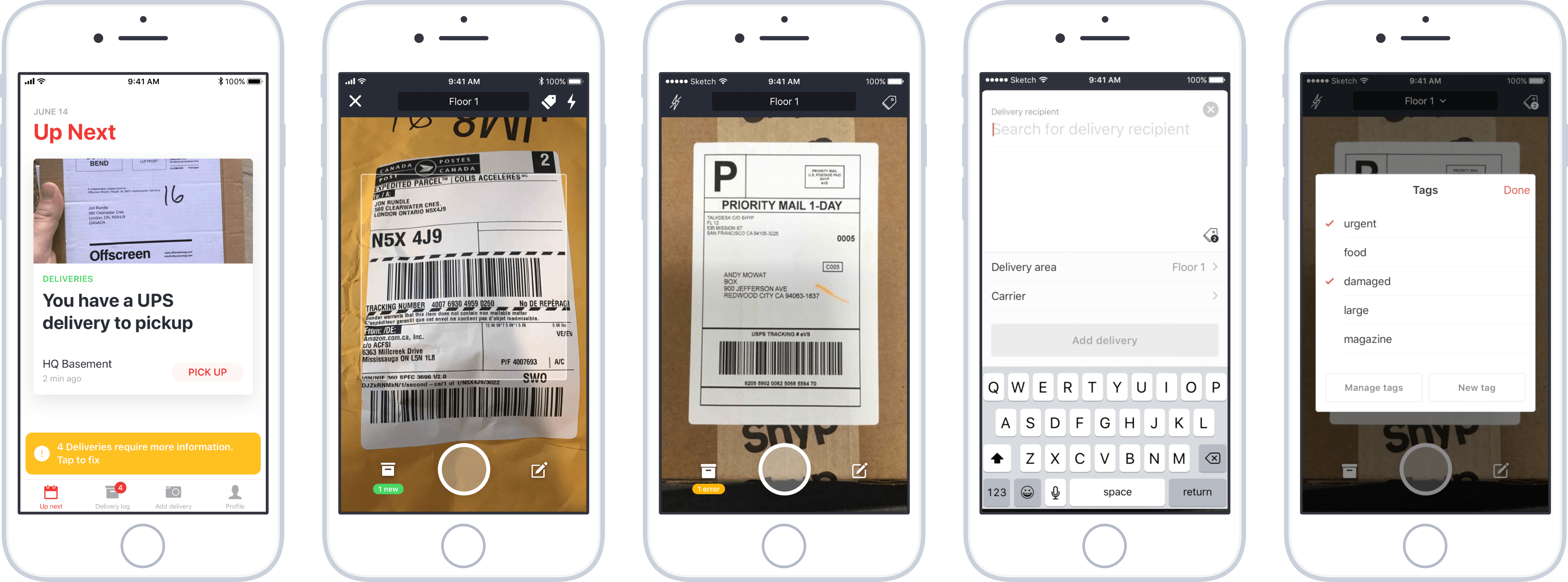
Envoy Deliveries automates the intake of personal and business packages arriving at an office by using OCR technology to scan the mailing label and automatically notify the recipient. Reminder notifications are sent daily, so people pick up their packages faster, leaving the mailroom less cluttered and hectic. |
Team |
Head of Product and Design (me), 1 product manager, 1 product designer, 2 engineers |
Launch |
October 2017 |
Problem
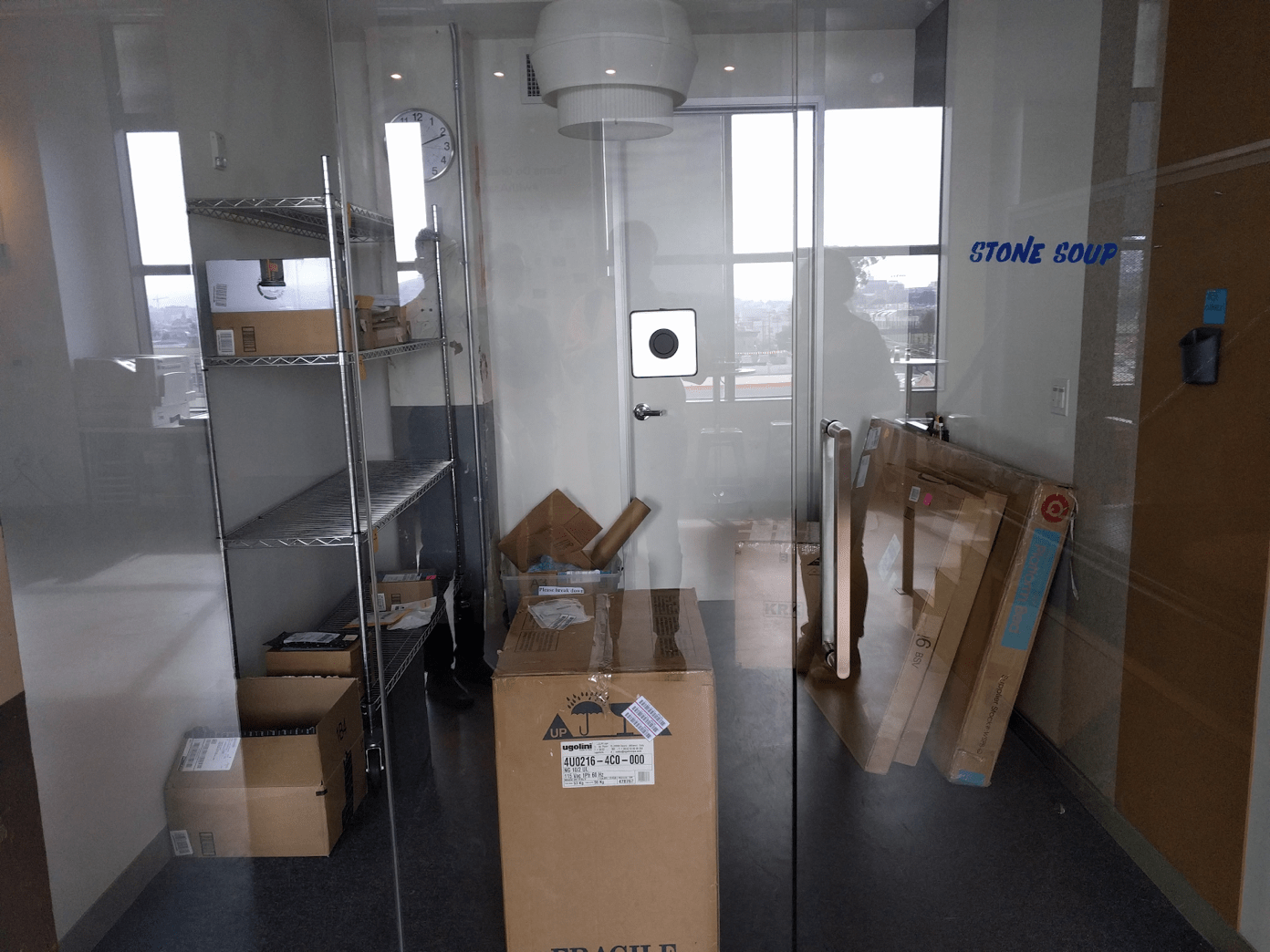
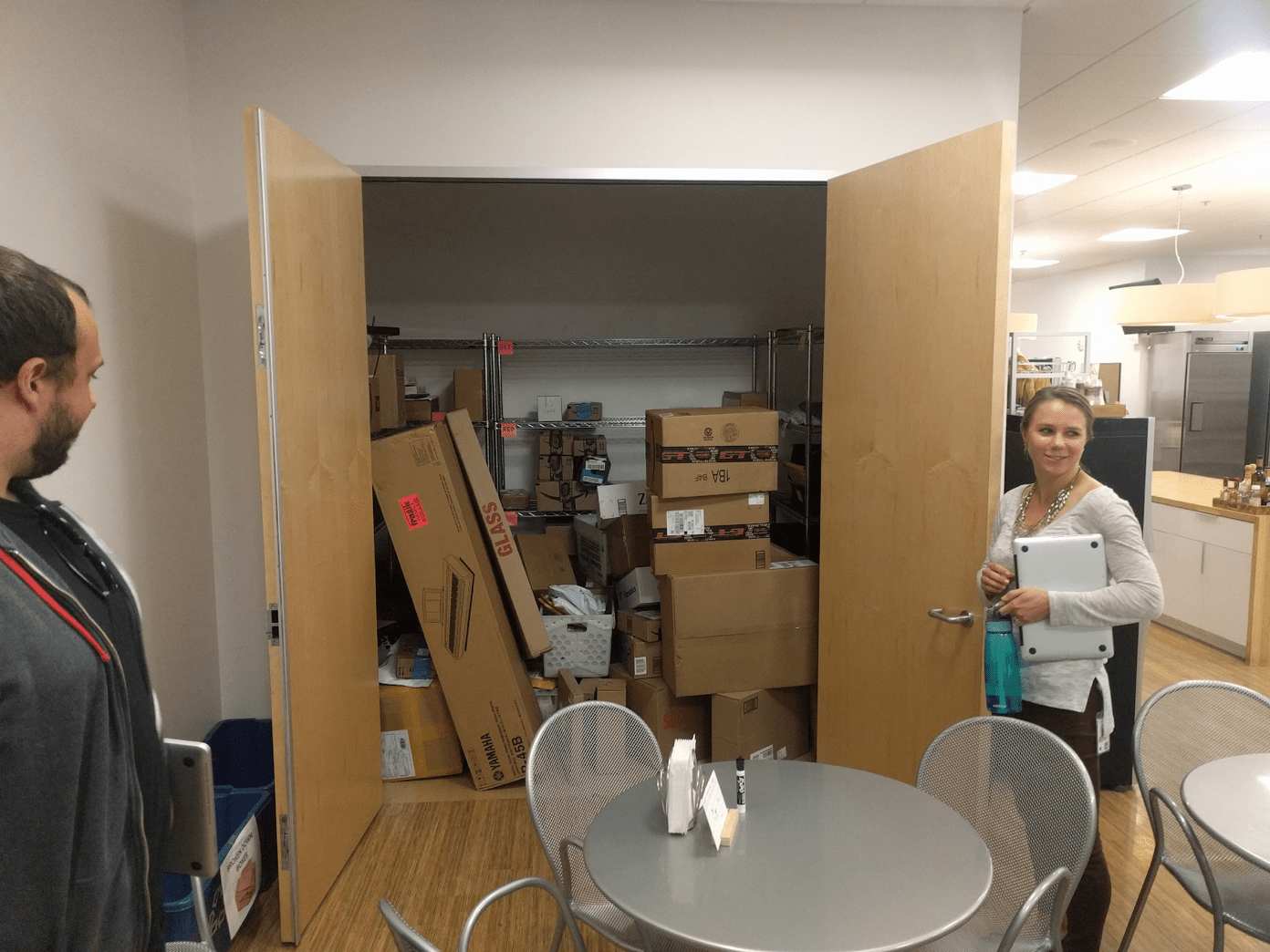
Most offices are not designed to accomodate personal package delivery. Mailrooms are tiny, and in many cases are repurposed from active conference rooms or storage areas... stealing precious and expensive space from legitimate business purposes.
Receptionists have neither the spare time or space to effectively catalog and route deliveries to the right person.
Employees take 1-2 weeks to pick up packages. Surprisingly, even those with Prime 2-day or same-day shipping.
Customer Research
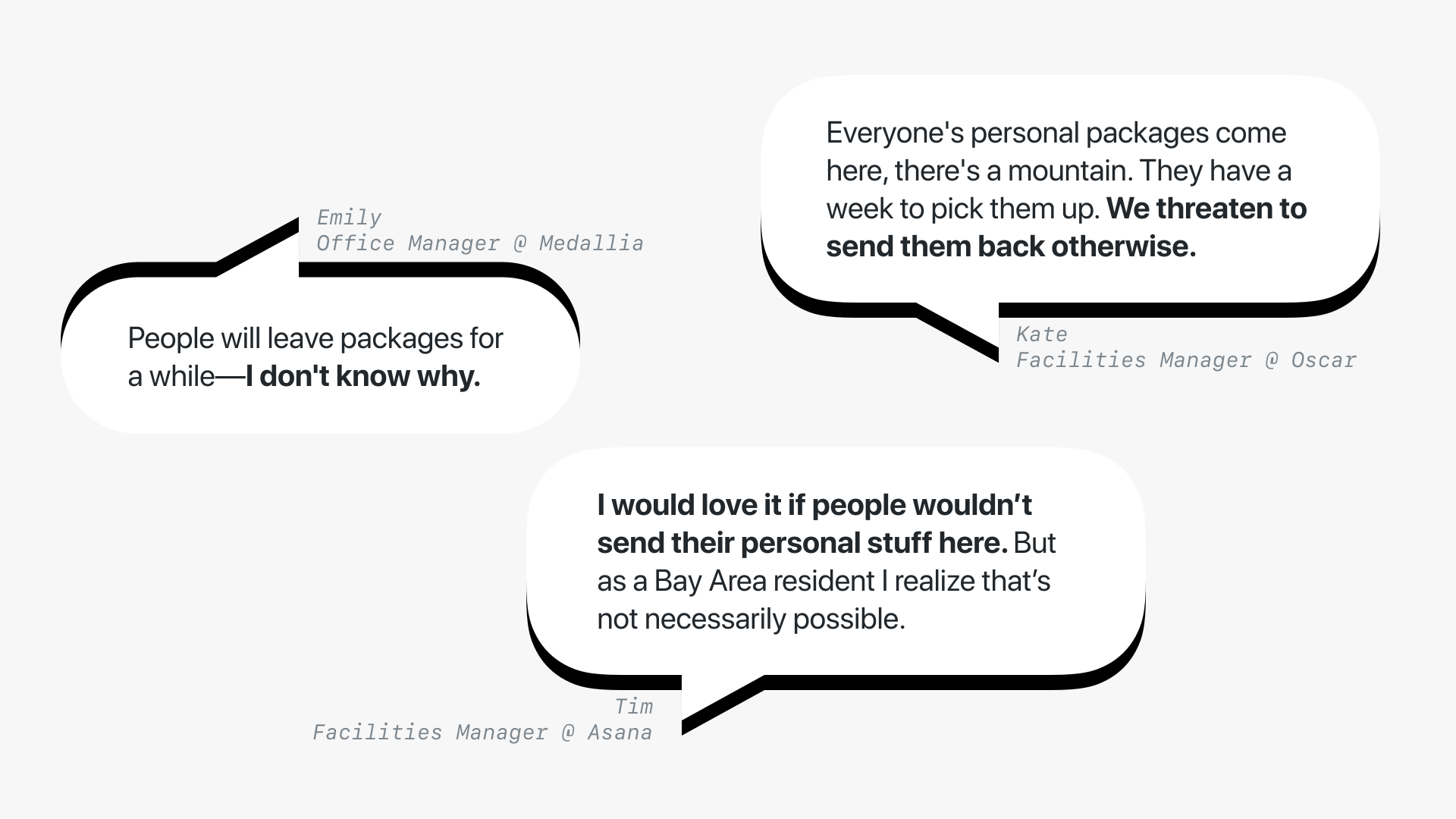
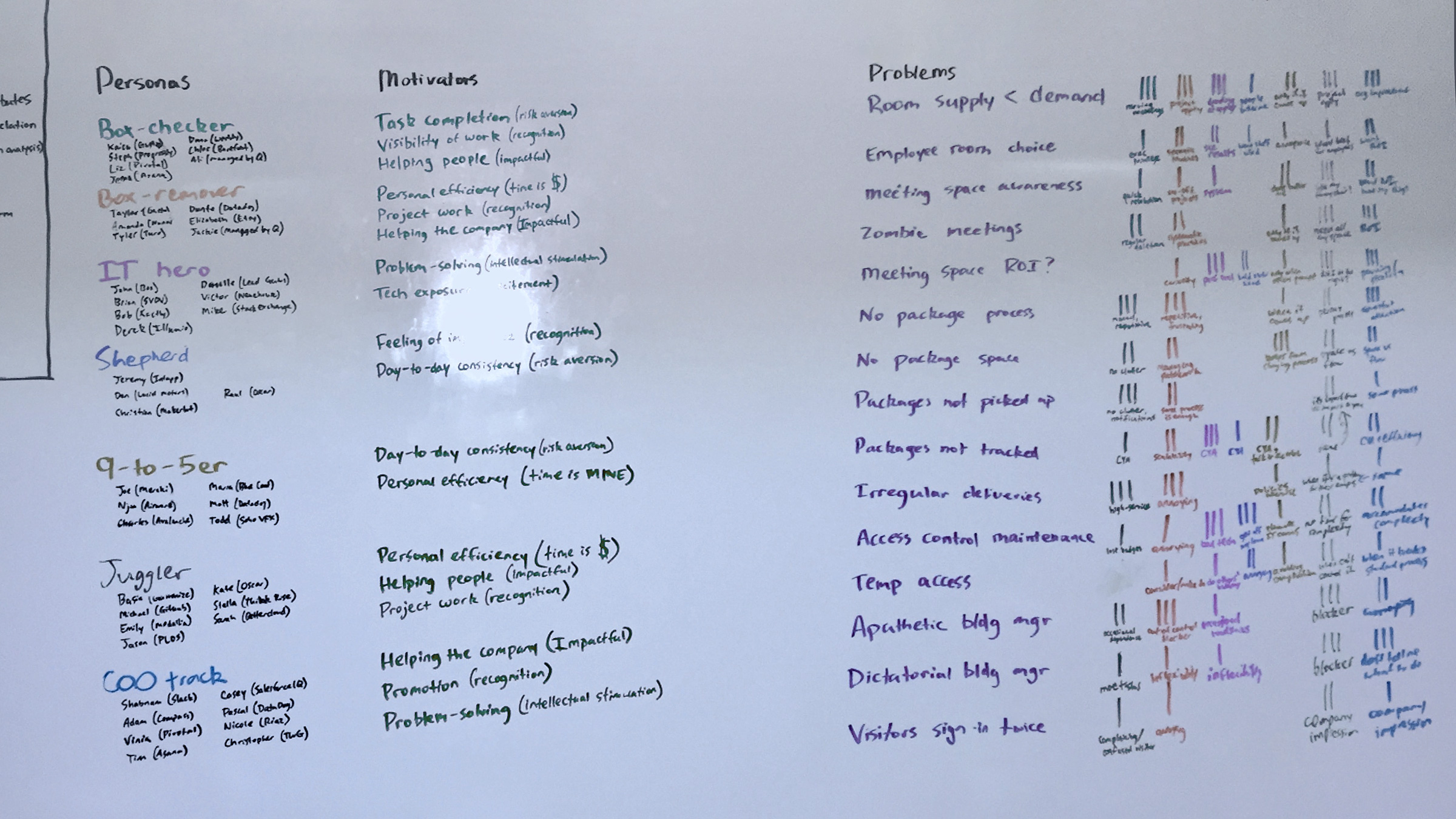
We conducted in-depth interviews with 38 Envoy customers from around the country—most on location. Seeing overflowing package rooms and talking to frustrated facilities staff on their home turf really helped us grasp the severity and ubiquity of the issue.
We took detailed notes on everything from their current triage process and policies to their office layout to the background and responsibilities of the customer. Everyone viewed the problem a bit differently, so we felt the need to create lightweight personas that described the different types of users.
Hypothesis
If we create a tool that automates package intake and employee pickup reminders, receptionists will spend less time, deliveries will take up less space, and employees will pick up their parcels faster.
Design Sprint
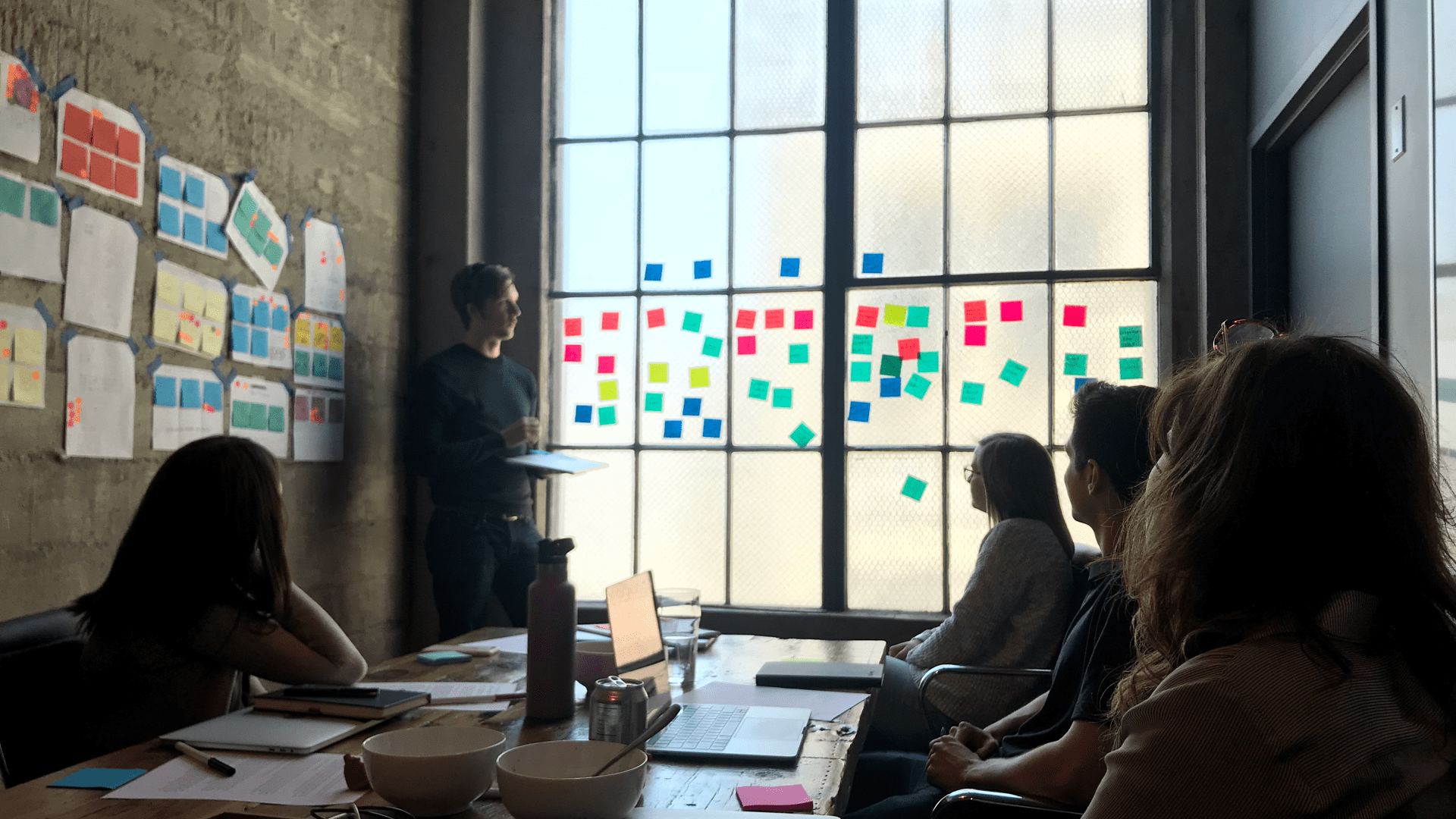
A designer on our team facilitated a week-long design sprint with the core team, as well as stakeholders from marketing, sales, customer support, and the CEO. With a clear articulation of the problem in hand, we explored dozens of different product ideas ranging from AI and robots to package lockers.
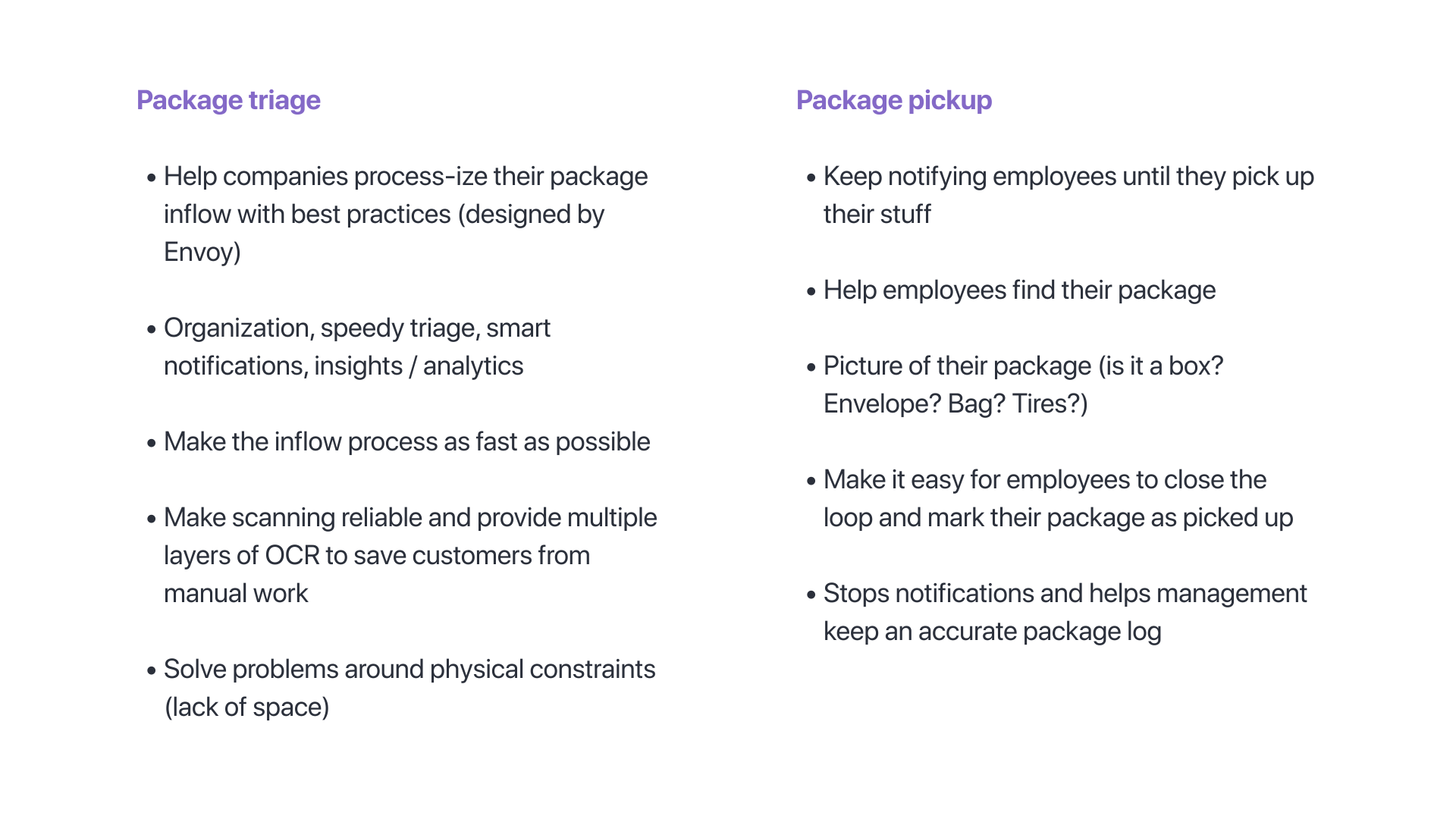
We were able to distill our ideas down to a small set of solution areas to explore in our first prototypes, bucketed into the categories of package triage and package pickup—the two most painful aspects of this problem.
Prototyping
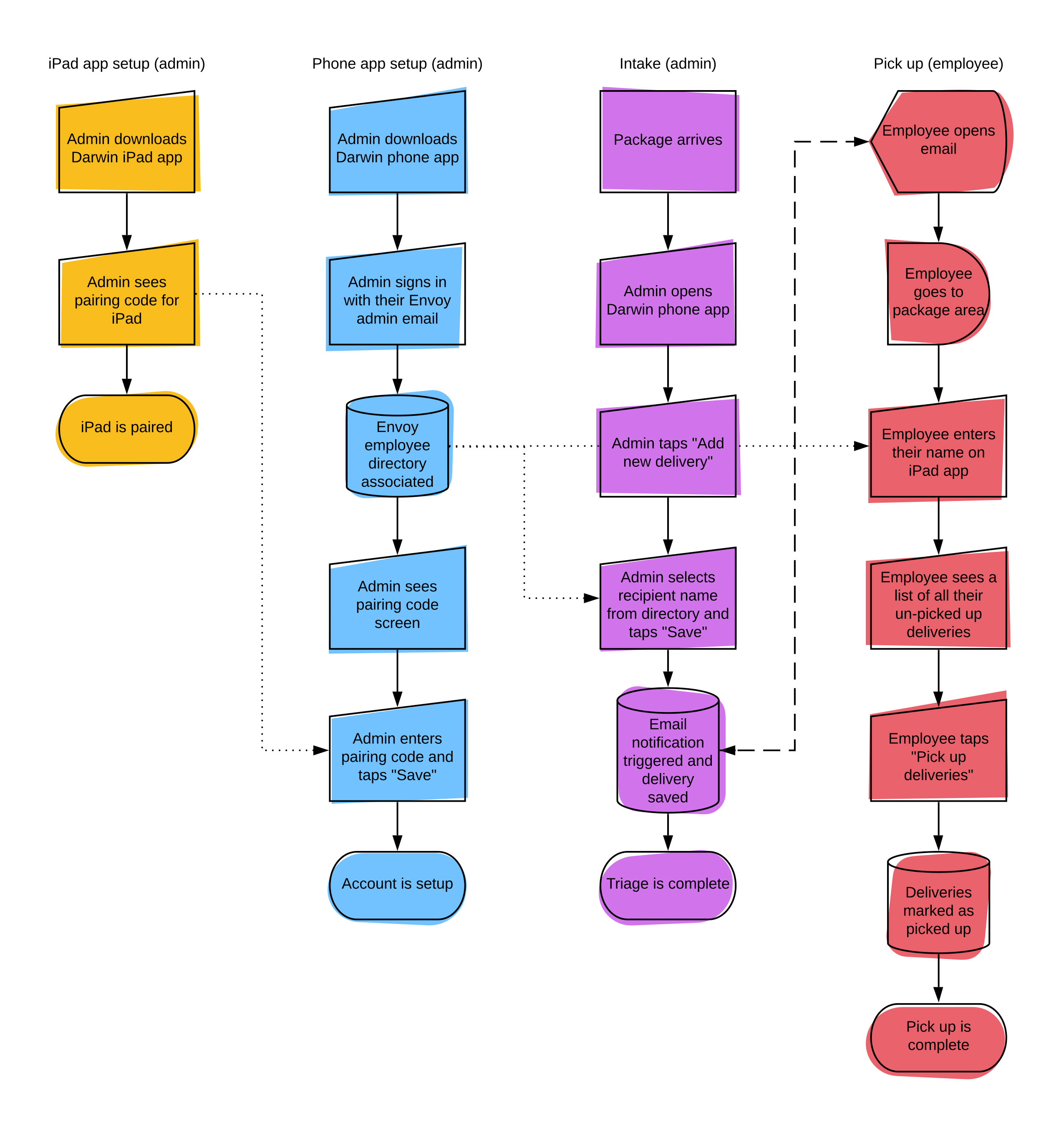
With a preliminary set of features we wanted to try, we next created user flows for triage, notifications, and pickup. Since packages are physical items, we tried to think about how the software would need to interact and respond to changes in the real world.
We knew the app would be an imprecise representation of the actual inflow and outflow of packages, so one of the basic principles in our design was to put the users in control. We didn't want the app to be too smart.
OCR
We wanted Deliveries to be impossibly fast. We experimented with OCR (optical character recognition) to automatically identify who a package was for and send them a notification. All the receptionist needed to do was take a photo of the label, and we'd do the rest automatically.
One of our designers had recently learned Framer, and he put together some interactive vignettes of key moments in the scanning flow. This not only helped us refine the experience very early on, but it served as an exciting and motivating peek into what we were actually going to build.
Beta Feedback
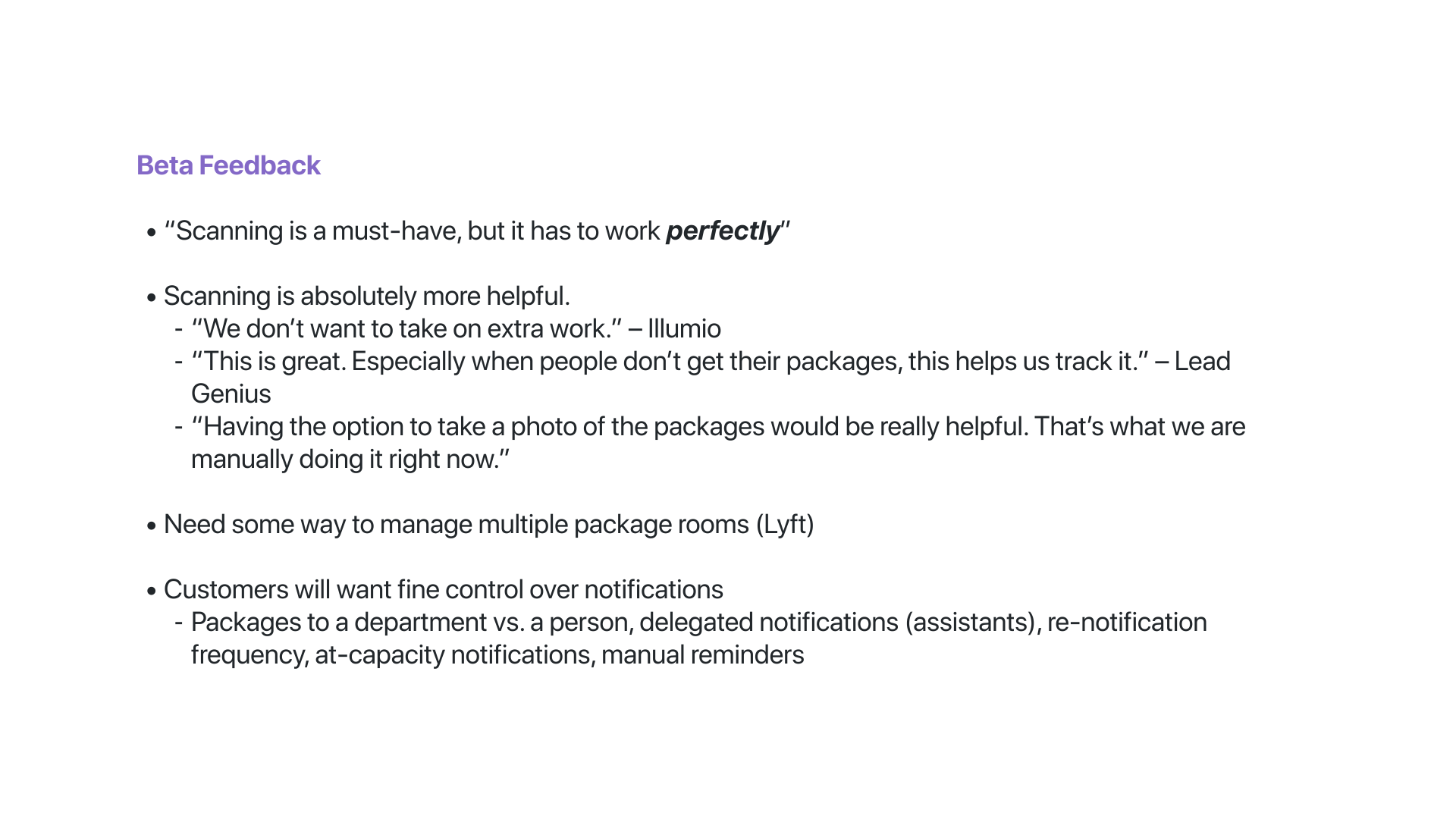
Our high-fidelity prototypes gave way to beta software that we put in the hands of real customers—many of the same people we interviewed at the outset of the project were eager to see what we came up with.
Feedback at this stage was invaluable. OCR presented many technical challenges, and we needed validation that potential users clearly saw benefit. Customer feedback was amazingly positive. One customer even asked if she could keep the (non-functional) beta so she could use it after we left. 🥳
Based upon the feedback from the dozen or so customers we met with, there were some clear areas we needed to focus on.
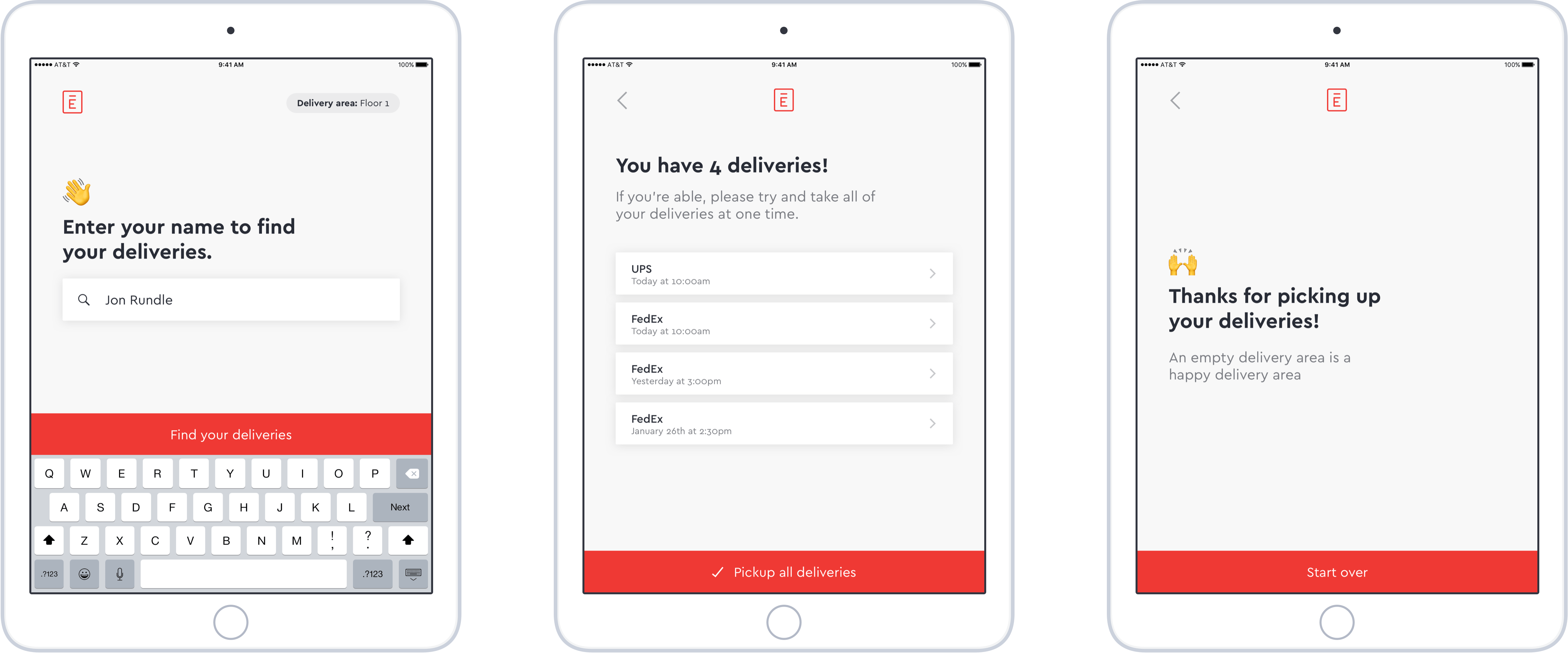
Final Designs
Product Video
As we prepared to launch Deliveries, we decided to create a video highlighting the key features, since nothing like this existed in the market before. We also wanted to highlight some of the key customers who had helped us develop the product through feedback and field testing. Social proof was also the most successful marketing tool Envoy Visitors had in its arsenal, so we applied that learning to Deliveries as well.
We engaged EVEN/ODD to direct and shoot a product video. I closely collaborated on schedule, engaging customers, location scouting, and everything else leading up to a successful filming day, and successful post-production.
Results and Learning
We launched in time for the holiday season (the busiest time for office deliveries)and we saw quick adoption within the first 2 months from our existing customer base. We struggled a bit to find customers who were new to the Envoy ecosystem though, and that became the Deliveries team's primary focus. Some of our biggest takeaways:
- Different products need different growth and marketing strategies, even if they cater to the exact same customers.
- A launch isn't a marketing strategy, and relying on tech press is a huge risk with minimal reward.
- We underestimated how packaging our two products together might increase adoption. Originally we thought that'd be a "someday" tactic, but we should have started there.
- Deliveries solves a ubiquitous problem, but not one people were looking for a solution to. We needed to better educate the market that a solution had arrived, where there previously had been nothing.
Deliveries was a huge win for customers. Based on customer reports:
- It was easy to deploy. Since the employee list was already available in the Envoy platform from Visitors, there was virtually zero set-up.
- Receptionists required no training. Just snap a photo and move to the next box.
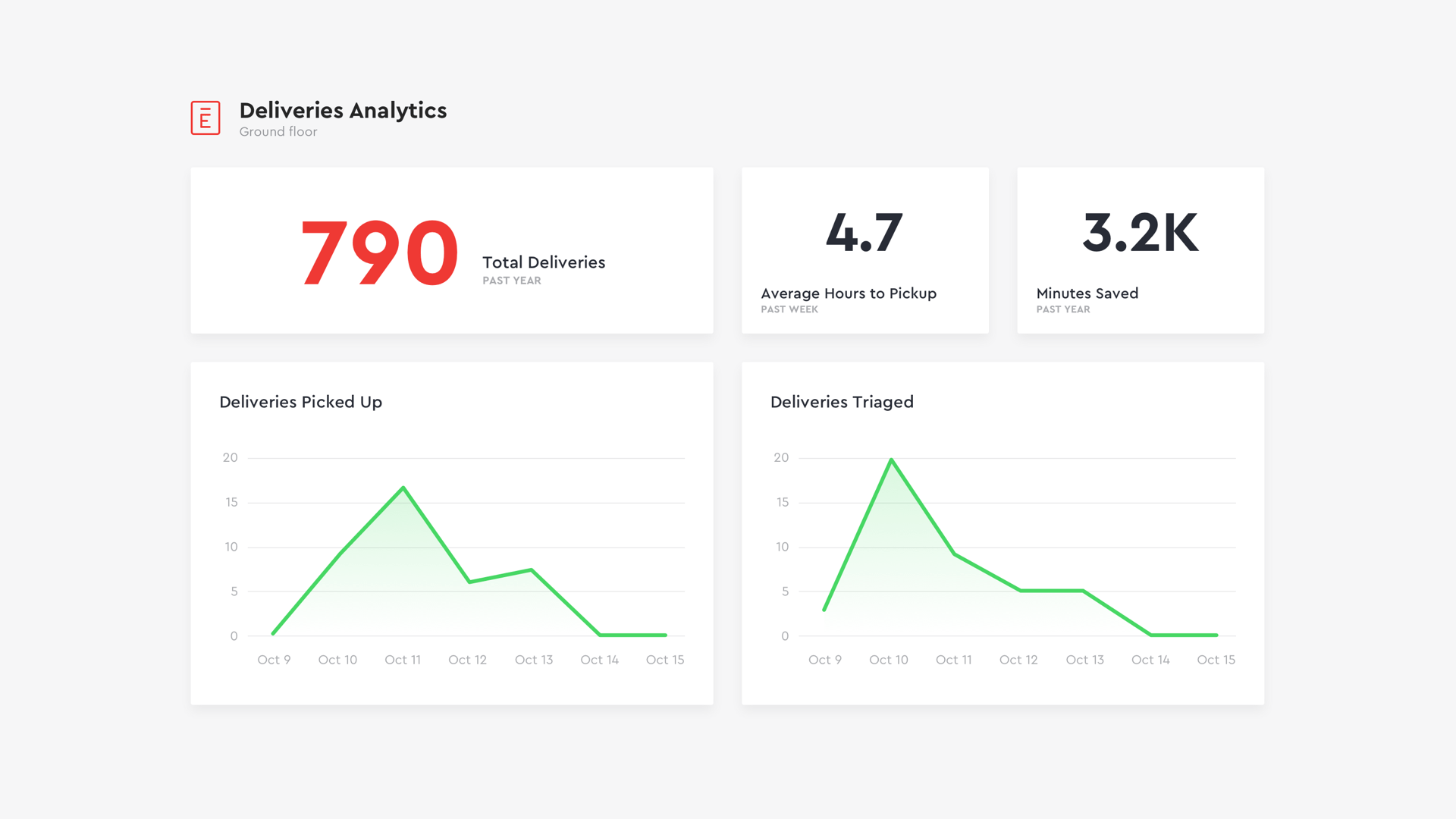
- The average time to pickup went from >2 weeks to 25 hours for most customers within the first week of trialing Deliveries. (25 hours because we send a reminder email and Slack at the 24 hour mark 😄)
···
In Closing
Deliveries was one of the most fun and challenging projects I worked on at Envoy. Launching a new product from zero was an amazing experience, and I owe all of the success to the hard work of the Deliveries team—Eric Crane, Jon Rundle, Linmiao Xu, and Benny Wong. Their scrappyness and insane ownership really made this project possible. 📦